Best of Retail Media
Colruyt Group Retail Media Services
Alpro wanted to increase purchase frequency on two plant-based drinks. No coupon. No discount. No price change of any kind.
In a category where volume is normally bought with price, that is a hard brief. Take away the strongest short-term sales lever and the media has nowhere to hide.
It also meant leaving the only route suppliers had ever had at Colruyt Group. Until retail media, visibility for a brand meant a trade operation: a promotional mechanic, expressed in the retailer’s own communication codes. Alpro had to show up as a brand instead, and be judged on that.
The audience was built from real purchases, not from declared intent: over 450,000 identified customers who had bought plant-based drinks as light or medium buyers during the previous twelve months, selected on transactions recorded at the till.
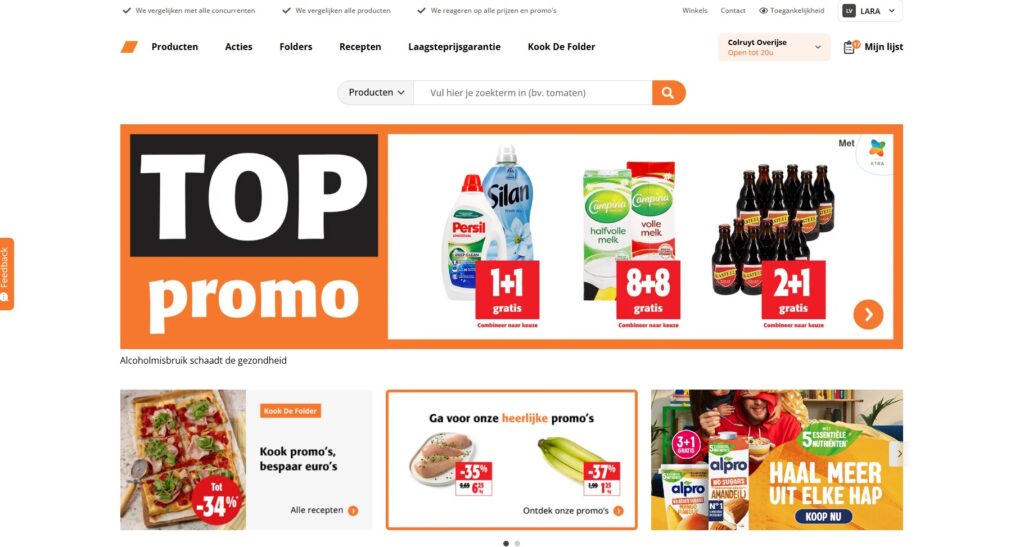
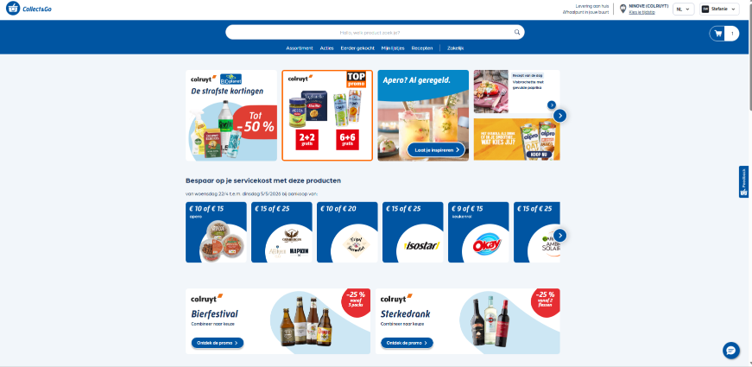
That single audience was then activated for two weeks across three Colruyt Group business units and four touchpoint types, from the moment the shopping decision starts at home to the moment the shopper reaches the store.
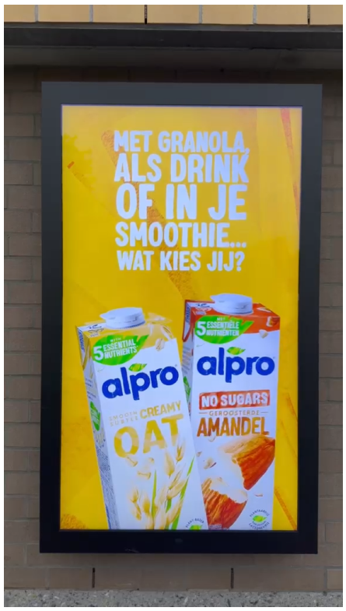
A brand campaign, not a trade operation. Alpro spoke in its own creative language, outside the codes of the folder and the promotional mechanic. On the store facade, the format behaves like a digital out-of-home panel: a brand message, ten seconds long, delivered at the moment the shopper arrives. Closer to a DOOH campaign than to a folder page, and until retail media that option did not exist for a supplier at Colruyt Group.
Holding the price constant is what makes this campaign readable. With no promotional mechanic in market, the media is the only variable that moved, so the result can be read as a media effect rather than a discount effect.
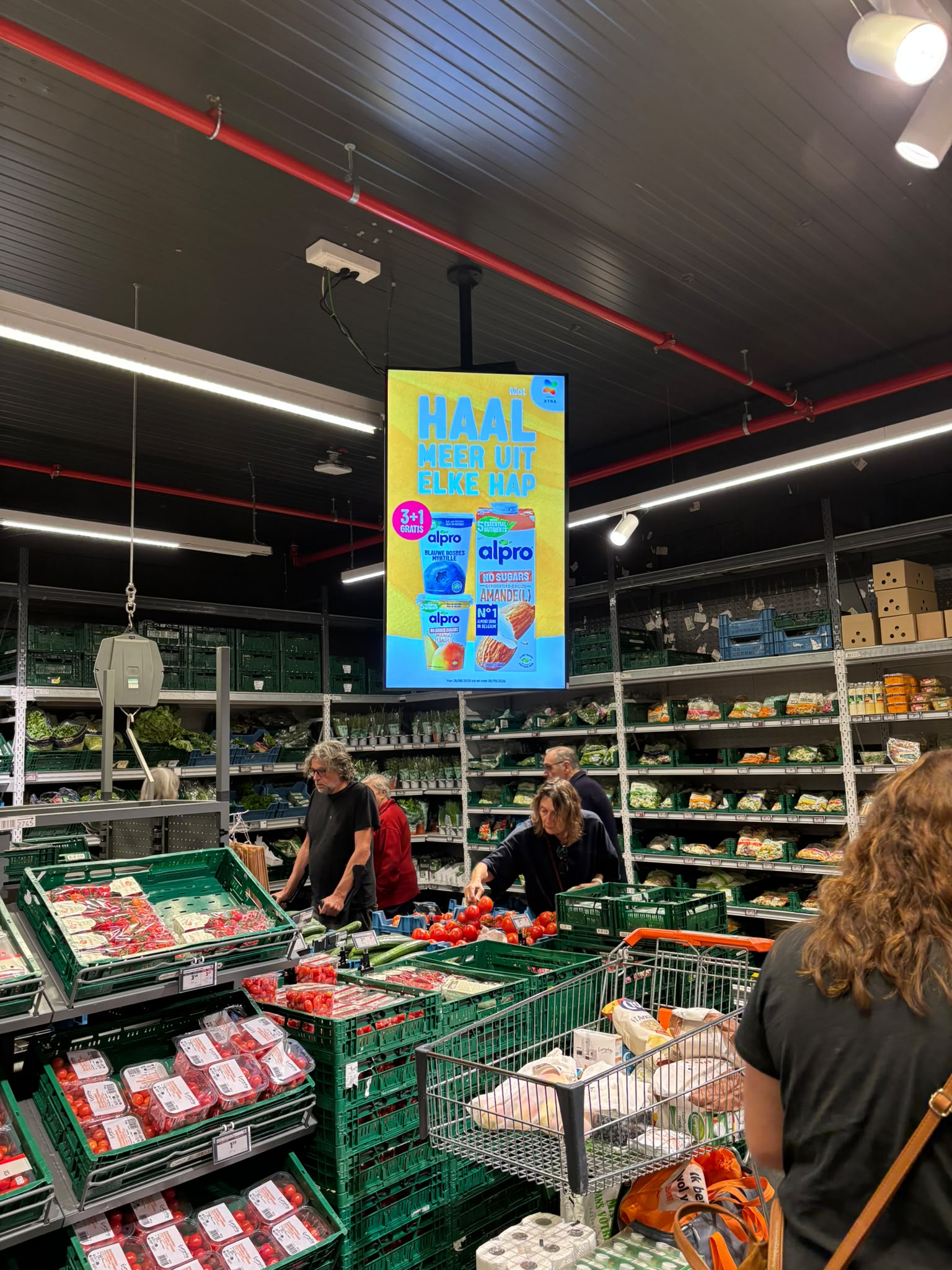
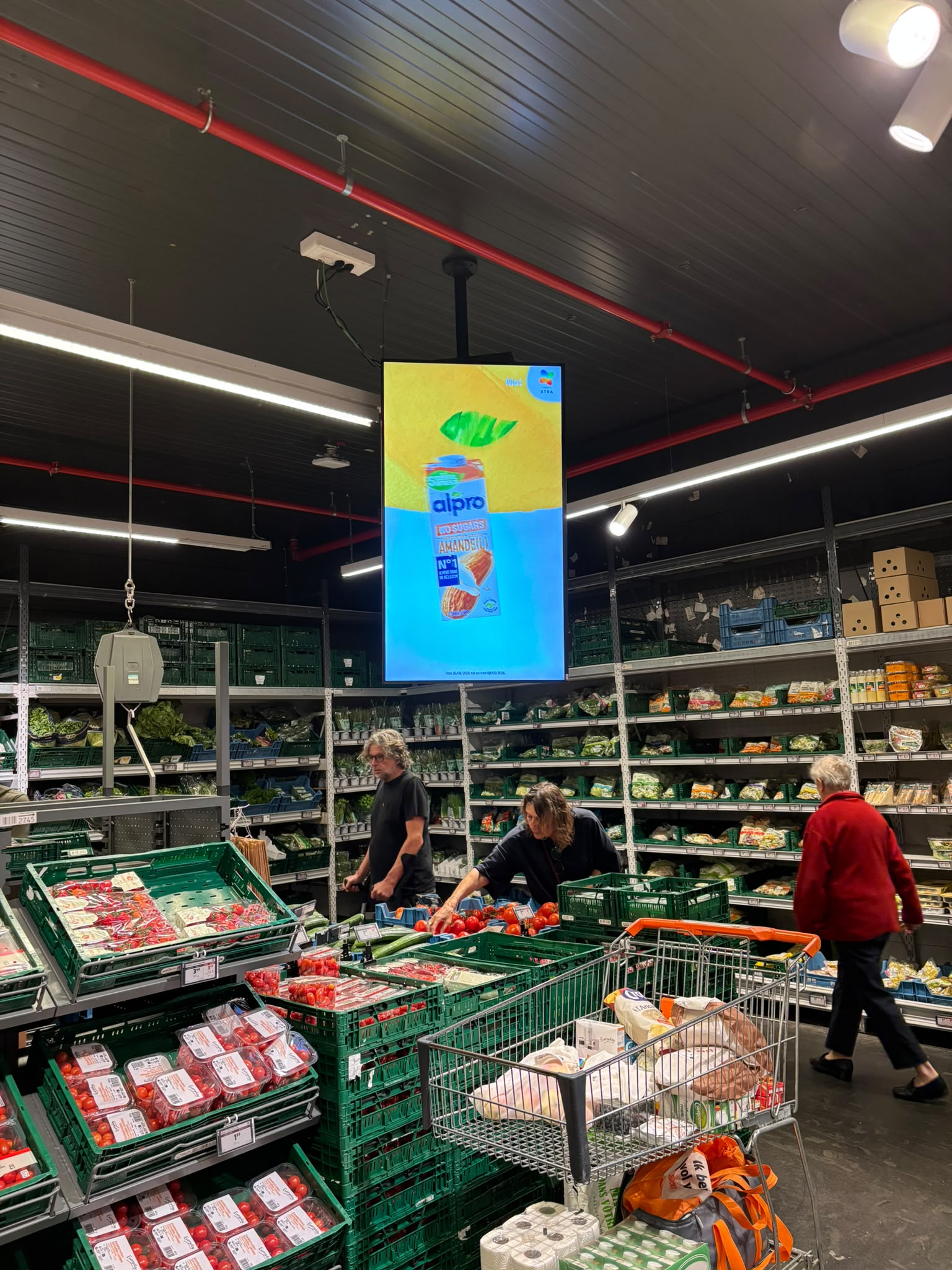
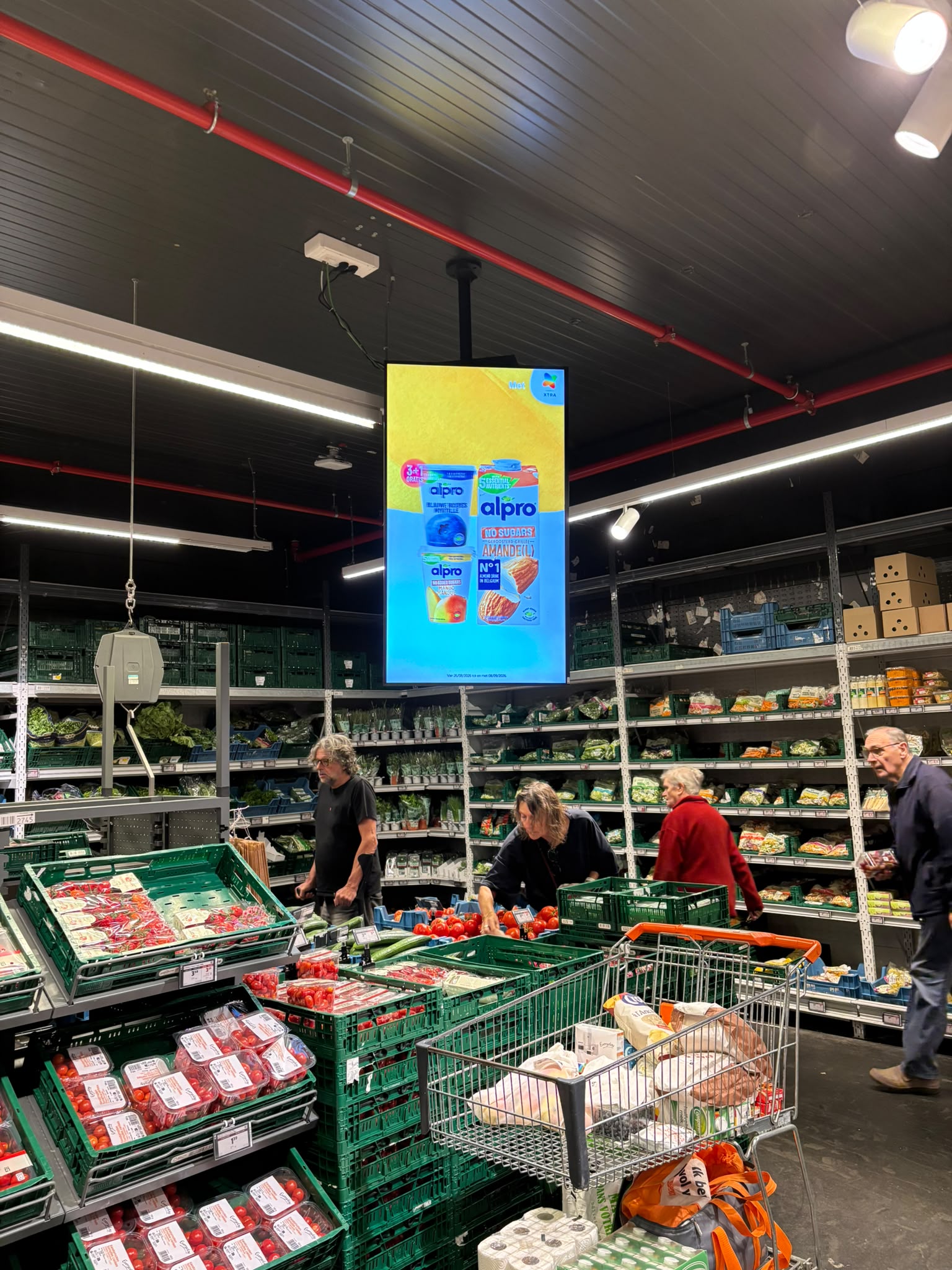
The campaign was also designed to answer a second question: what does the in-store screen actually add? Sales were compared between stores where the digital signage ran and stores where it did not, over the same period and on the same references.
Because Colruyt Group recognises more than 83% of in-store transactions, an in-store screen can be judged on sales rather than on estimated visibility. Exposure and purchase sit in the same dataset, on the same identified people.
Reach on the target group, and it is largely in store
85% of the identified target group was reached, at an average frequency of 3.8 and 1.46 million impressions. Digital signage delivered around 60% of that reach on its own, ahead of e-mail, app and web.
Sales moved without price moving
The promoted references gained 9% in sales, with no coupon and no discount at any point in the campaign.
The combination is what performs
Stores where the digital signage ran delivered a 19.8% uplift. Stores without it delivered 5.2%. Both are real results for a campaign with no promotion, and that is the point: the digital plan works on its own everywhere. Add the in-store screen and it works close to four times harder.
Scope
Two references, two weeks, 21 April to 5 May 2026.
Target group
Over 450,000 identified customers, light and medium buyers of plant-based drinks over the twelve months preceding the campaign, selected on till data.
Reach
Unique customers of the target group exposed to at least one touchpoint during the flight, expressed as a share of that target group. This is net reach on the target group, not opportunity to see against total store footfall. In-store exposure is included, and is attributable because more than 83% of in-store transactions are matched to an identified customer.
Sales uplift
Campaign period compared with the two weeks preceding it, on Colruyt Group transaction data. This is a pre versus post measurement, not a control group design. Control group methodology is being implemented for the next campaign wave.
Digital signage contribution
Sales compared between stores where the digital signage ran and stores where it did not, over the same period and on the same references. Store allocation was not randomised, so this comparison is directional.